
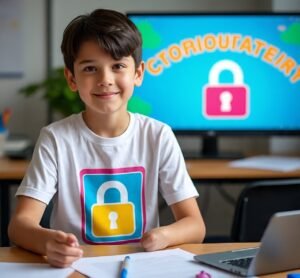
Cybersecurity for Kids: Keeping Our Little Explorers Safe in a Big, Busy Online World
Let’s not sugarcoat it, raising kids today is wild.
They’re growing up in a world where screens are second nature. They swipe before they speak full sentences. They learn to search on YouTube before they learn to read. Sometimes, it feels like they know the iPad better than we do.
And that’s not a bad thing.
The internet is part of their life now. It’s where they play, learn, laugh, and connect. But just like any playground, it’s not always sunshine and snack time. There are places online we don’t want them wandering into. There are people who don’t have the best intentions.
So what do we do?
We do what we’ve always done. We protect them. We teach them. We love them through it.
We show up.
What Is Cybersecurity?
Forget the techy stuff for a minute. Think of it this way:
Cybersecurity is just teaching your child to be careful online, the same way we teach them not to touch a hot stove or not to open the door for strangers.
It’s their “stay safe” toolbox for the internet.
We don’t need to overwhelm them with big scary words or complicated rules. We just need to give them a few simple tools and reminders:
- Protect your personal stuff.
- Be careful who you talk to.
- If something feels off, say something.
That’s it. No tech degree required.
Why Even Little Ones Need to Know This?
Kids are naturally curious, it’s part of what makes them amazing. They explore, ask questions, click buttons, and dive in headfirst.
And online? That same curiosity can land them on a strange website, chatting with someone pretending to be a kid, or clicking on something that fills the screen with stuff they shouldn’t see.
It’s not their fault. They’re not doing anything “bad.”
They just need someone to help them see where the bumps are before they trip.
The Basics Every Kid Can Understand
Here are the basics that we, as grown-ups, can gently repeat often during breakfast, during a car ride, while folding laundry.
- Don’t talk to strangers online. Even if they say they like the same video games. Even if they seem nice.
- Keep your personal stuff private. Your name, your school, your birthday that’s just for family and close friends. Not random people online.
- If something feels weird, tell someone. Even if it seems small. Even if you think you’ll get in trouble. You won’t. We’re in your corner.
- Use strong, fun passwords. The weirder, the better. “SpaghettiNinja$22” is way cooler (and safer) than “abc123.”
And guess what? When kids feel safe, heard, and trusted, they get it. And they start making smarter choices all by themselves.
Making Online Safety Feel Easy, Not Scary or Boring
Let’s be real. kids don’t like lectures. (Do any of us?)
But they love games, stories, and being part of something. So instead of laying down a list of “don’ts,” try these:
Make it a Game
Play “Spot the Scam” with silly fake messages. Or have a “password competition” who can make the funniest, strongest password?
Let them be the hero in the story. Let them teach you something.
Tell Stories That Stick
Make up bedtime stories where the hero defeats the “Pop-up Troll” or outsmarts the “Sneaky Link Monster.” Make it fun. Make it silly. Make it meaningful.
Ask Instead of Preaching
Instead of “Don’t give out your address,” ask, “What would you do if someone online asked where you live?”
Let them think. Let them figure it out. That’s where the magic happens.
Let Privacy Be Their Superpower
Here’s something that really works:
Tell your child, “Your information is special. You don’t have to give it to anyone you don’t trust. It’s your superpower.”
Suddenly, privacy isn’t about rules, it’s about self-respect.
Keep Talking. It’s Not a One-Time Thing
The apps will change. The games will change. Your child will change.
So this isn’t a one-and-done kind of talk. It’s something that should come up casually, regularly, and lovingly.
Ask questions like:
“Anything weird pop up today?”
“Did any strangers try to talk to you in your game?”
“Need help with any settings?”
Don’t wait for a problem to start the conversation. Keep the door open every day, and your child will walk through it when it matters most.
And if they mess up?
Don’t yell. Don’t panic. Just breathe.
Say something like:
“Thank you for telling me. That was brave. We’ll figure it out together.”
That one sentence builds trust more than anything else ever could.
It’s Not About Fear. It’s About Freedom With Boundaries.
We’re not trying to raise scared kids.
We’re raising smart, kind, thoughtful little humans.
They don’t need to be afraid of the internet, they just need to know how to move through it with awareness and confidence.
Because this is their world now. It’s their library, their playground, their classroom, their community.
And our job?
It’s to walk beside them, not behind them. To guide, not control. To teach, not terrify.
Final Thought: You Don’t Have to Be a Tech Genius. Just Be Present.
You’re already doing enough. You’re showing up. You’re asking questions. You’re paying attention. That’s what matters.
Keep it simple. Keep it kind. Keep it going.
And if your child ever looks up at you and asks, “Why does this stuff matter?”
You can smile and say:
“Because your safety matters. Because I want you to have the most fun online and come back home safe, every time.”
That’s all it is.
Cybersecurity isn’t about the internet.
It’s about connection, care, and unshakable love.